The Ocean Drum: Bringing the Sound of Water Into Guided Grounding
A brief look at how the ocean drum creates its wave-like sound and why I use it to support transition, imagination, and rest.
Peace Friends,
Some instruments announce themselves immediately.
A gong may fill the room with a powerful, expanding tone. Crystal singing bowls can create sustained layers of sound that seem to remain in the air. Chimes may arrive brightly and disappear almost as quickly as they began.
The ocean drum offers something different.
When it is tilted slowly, the small beads inside move across the drumhead and create a sound that resembles water rolling toward the shore. With a change in speed or direction, that gentle movement can grow into the sound of a stronger wave.
It is an instrument capable of creating both softness and motion.
During a Guided Grounding sound immersion, I often use the ocean drum to help participants become immersed in the sound journey – washing away thoughts, and flooding the experience with sensation.
What Is an Ocean Drum?
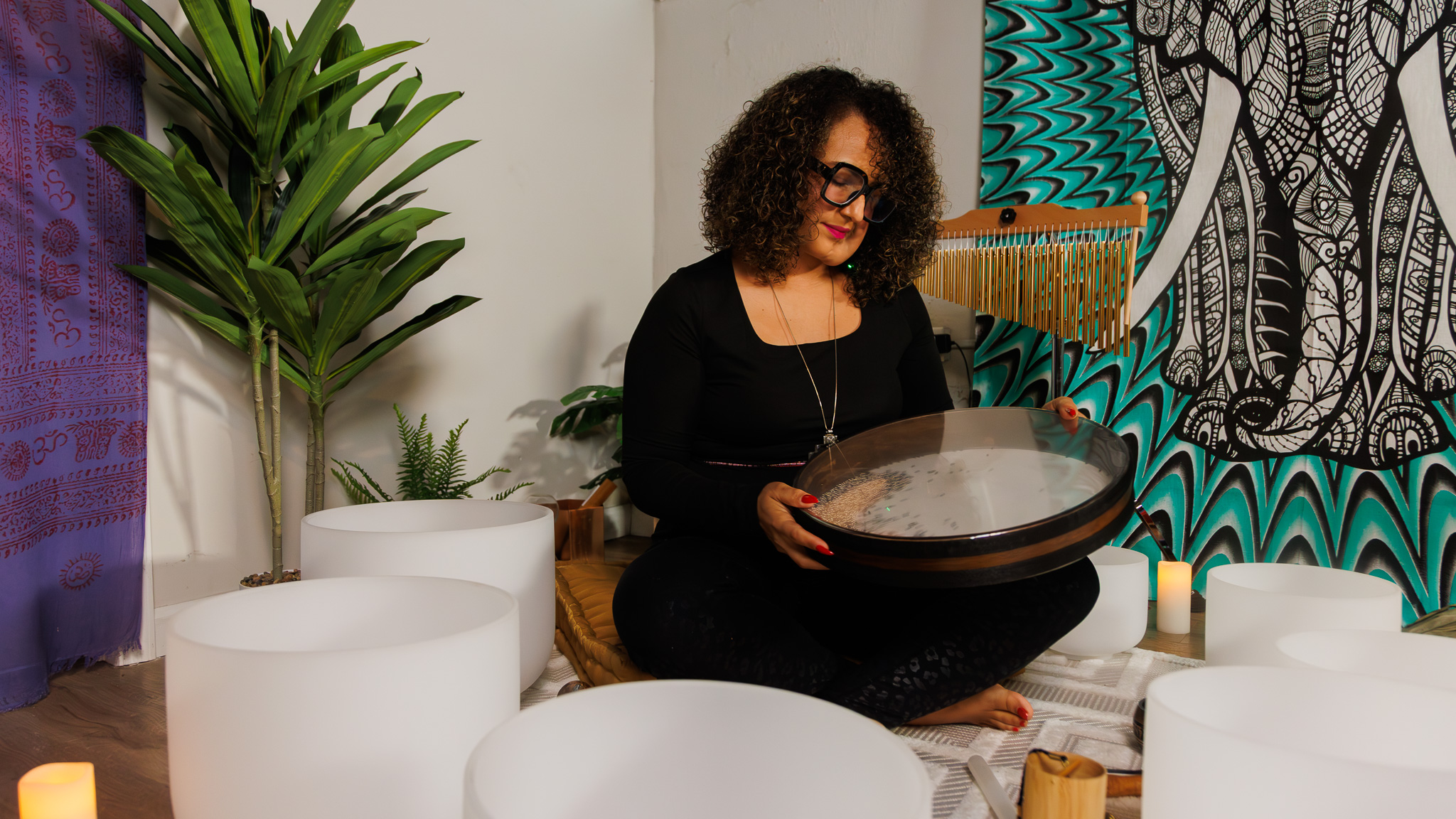
An ocean drum is a shallow, circular percussion instrument containing small beads or pellets between its drumheads.
Rather than playing it primarily by striking the surface, the player holds and tilts the instrument. As the beads move across the interior, they create a rolling sound that can resemble water moving over sand or stones.
The sound changes according to how the instrument is moved.
A slow, steady tilt may create the impression of gentle water reaching the shore.
A faster circular movement may produce a fuller, more active wave.
A sudden change in angle or direction can create something closer to the sound of water breaking or crashing, or even heavy rainfall.
Some ocean drums can also be played with the hands or mallets or used as shakers. Their design allows a facilitator to create a wide range of textures, from soft rolling water to stronger, more dramatic waves.
Listen to the Ocean Drum
The ocean drum is best understood by hearing it.
Guided Grounding has created an extended ocean drum recording that allows listeners to experience its shifting, wave-like texture without spoken guidance.
The recording may be used as a quiet background for sleep, rest, meditation, reflection, or simply creating a calmer environment.
3 Hours Ocean Drum Sounds — Deep Sleep, Stress Relief & Meditation
An extended ocean drum recording from Guided Grounding.
As you listen, notice how the sound seems to gather, move forward, and gradually recede. There is no need to follow the sound closely or make anything happen. You can simply allow it to be present.
An Instrument With an Unexpected History
The modern ocean drum is connected to an earlier instrument known as the geophone.
The geophone was invented by French composer Olivier Messiaen for his orchestral work Des canyons aux étoiles…, written during the early 1970s. Inspired by Native American water drums, the instrument used beads moving across a stretched surface to suggest the sound and movement of shifting earth.
Over time, the instrument became more commonly associated with rolling water and became known as the ocean drum. Evolving back to the roots of its indigenous inspiration.
The physical movement remains similar: small objects traveling across a stretched surface.
Yet one listener may hear sand moving across a landscape, while another hears waves reaching the shore, and others hear heavy rainfall reminiscent of their childhood.
Sound can be specific and open-ended at the same time.

Why the Sound of Water Can Feel Familiar
Many people have a personal relationship with the sound of water.
They may remember visiting the ocean as a child, sitting beside a lake, listening to rain, walking near a river, or imagining a place and time where life felt slower.
The ocean drum does not reproduce every detail of those environments. It offers a suggestion. That suggestion may be enough for the imagination to begin creating a landscape.
During a sound immersion, participants do not need to determine exactly what the sound represents. They may notice water, wind, movement, distance, or something entirely different.
The sound of the ocean drum may invite participants to imagine themselves beside water, beneath an open sky, or in a place that feels spacious and unhurried. Others may not form an image at all. They may simply hear the beads moving and notice how the sound changes. Both experiences are valid. There is no required visualization and no correct emotional response.
The ocean drum offers a possibility, not an instruction. The invitation is simply to listen and to feel.
The Role of the Ocean Drum in Guided Grounding
The ocean drum is rarely the foundation of an entire Guided Grounding session.
Instead, I often use it as a transitional instrument.
It may help move the experience from the gentle invitation into silence and relaxation, into deeper meditative and immersive soundscapes. It may also help signal that the sound journey is coming to an end, and letting the waves ground the attention back to the shores of the present moment.
Its movement gives the session a sense of travel without requiring the participant to go anywhere.
The sound may begin in the distance, gradually move closer, fill the space, and then recede. That natural rise and fall can create room for the breath to soften and the attention to settle. Intentional rest does not always mean trying to empty the mind. Sometimes the mind settles more easily when it has a gentle place to go.
More Than a Sound Effect
It would be easy to describe the ocean drum as an instrument that imitates water.
That is what it does acoustically. But within Guided Grounding, its purpose is broader.
It brings movement into stillness. It creates transition without urgency. It invites imagination without demanding concentration. It reminds us that something can be active and calming at the same time.
The ocean itself is never completely still. It moves forward, pulls back, gathers energy, and releases it. Perhaps that is part of what makes the sound feel meaningful. Rest does not always mean that nothing is happening. Sometimes rest is the space in which movement becomes more gentle.
Experience Guided Grounding
Guided Grounding offers public and private sound immersions, couples experiences, small-group sessions, in-home sessions, and professionally facilitated programs for organizations.
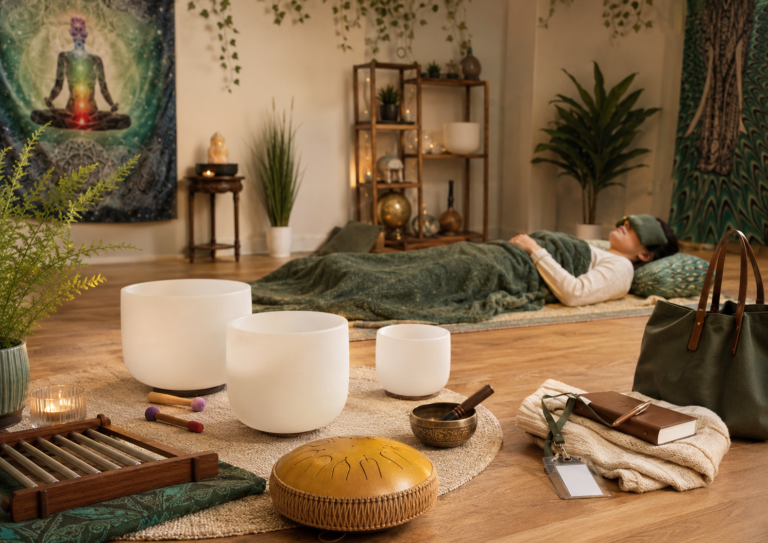
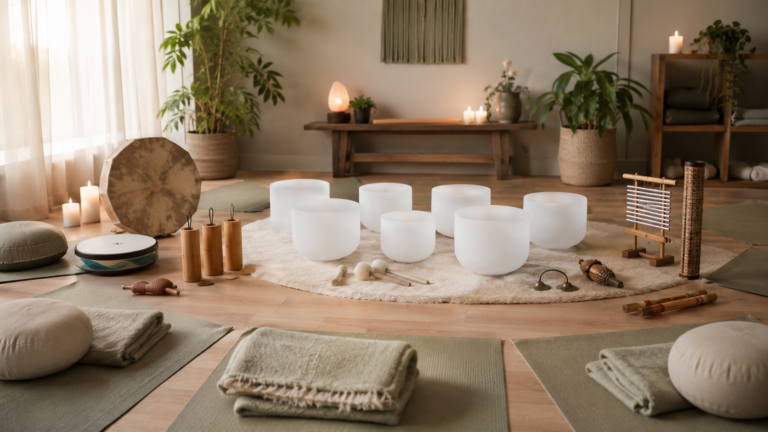
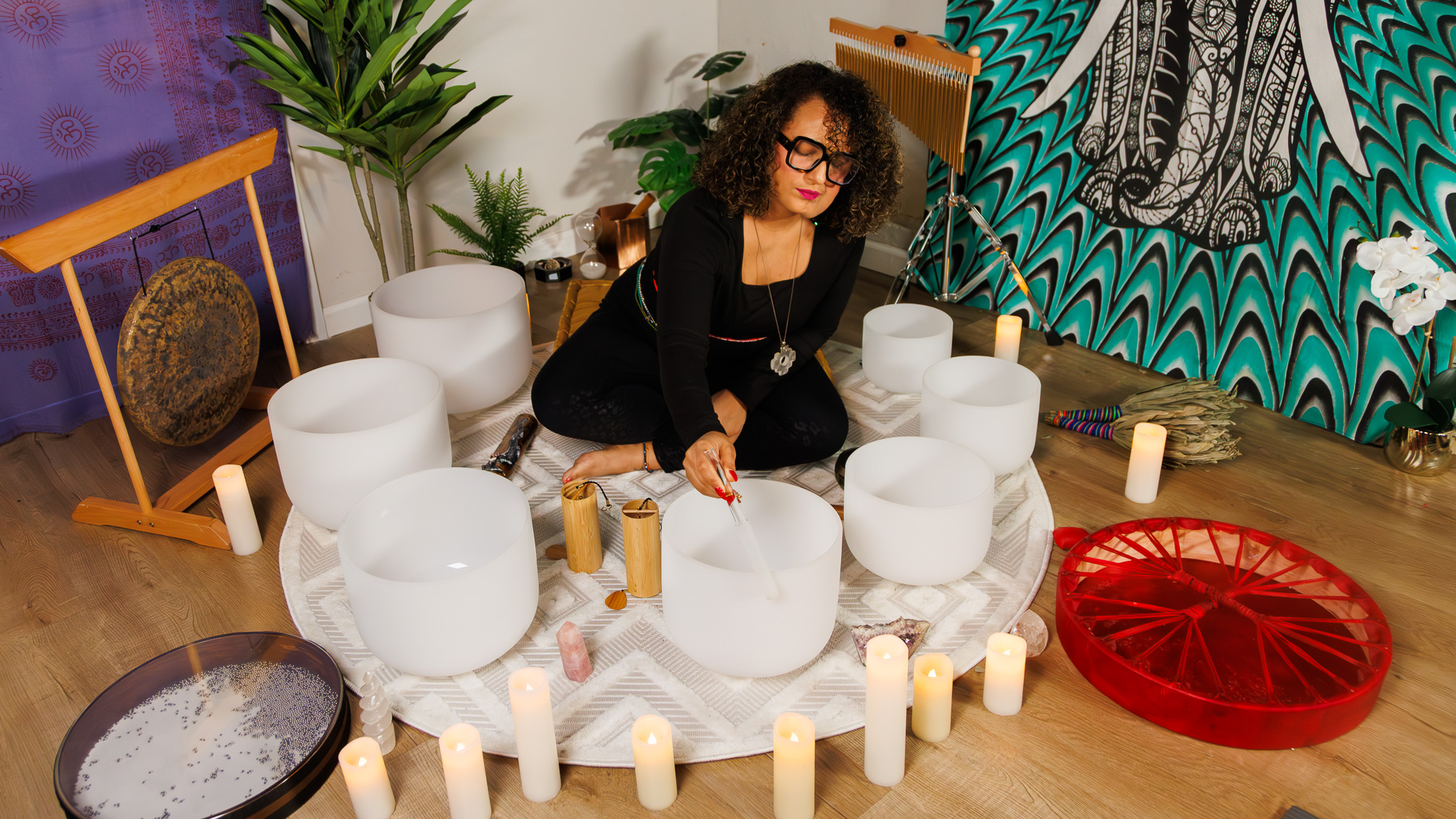
Each experience may include crystal singing bowls, the ocean drum, chimes, percussion instruments, and other sounds selected to support the flow and purpose of the session.
You may also return to the Guided Grounding ocean drum recording whenever you need a quiet background for rest, reflection, sleep, or meditation.
There is no right way to experience sound.
There is only an invitation to pause, listen, and notice where the sound takes you.
Explore More
- Guided Grounding: 3 Hours Ocean Drum Sounds — Deep Sleep, Stress Relief & Meditation
- Remo: Ocean Drum instrument overview
- Utah Symphony: Commentary on Olivier Messiaen’s Des canyons aux étoiles…
Hear where the sound takes you.
Guided Grounding experiences are available for individuals, couples, small groups, community gatherings, and organizations.
There is only an invitation to pause, listen, and notice where the sound takes you.