Crystal Singing Bowls: The Sound at the Heart of Guided Grounding
A brief history of crystal singing bowls, how they create sound, and why I use them to support rest and reflection.
Peace Friends,
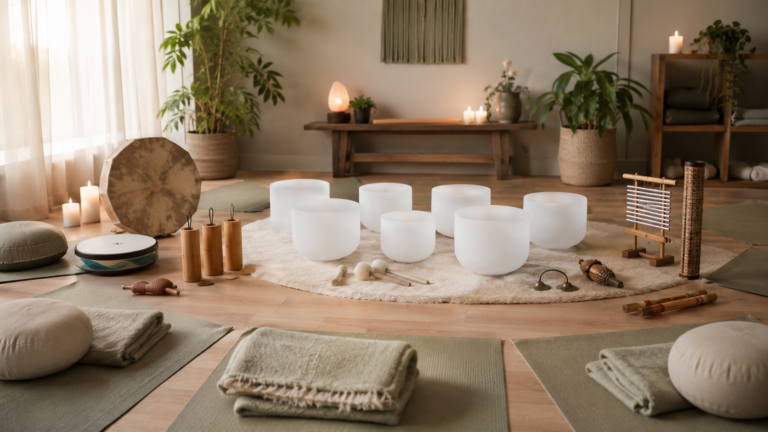
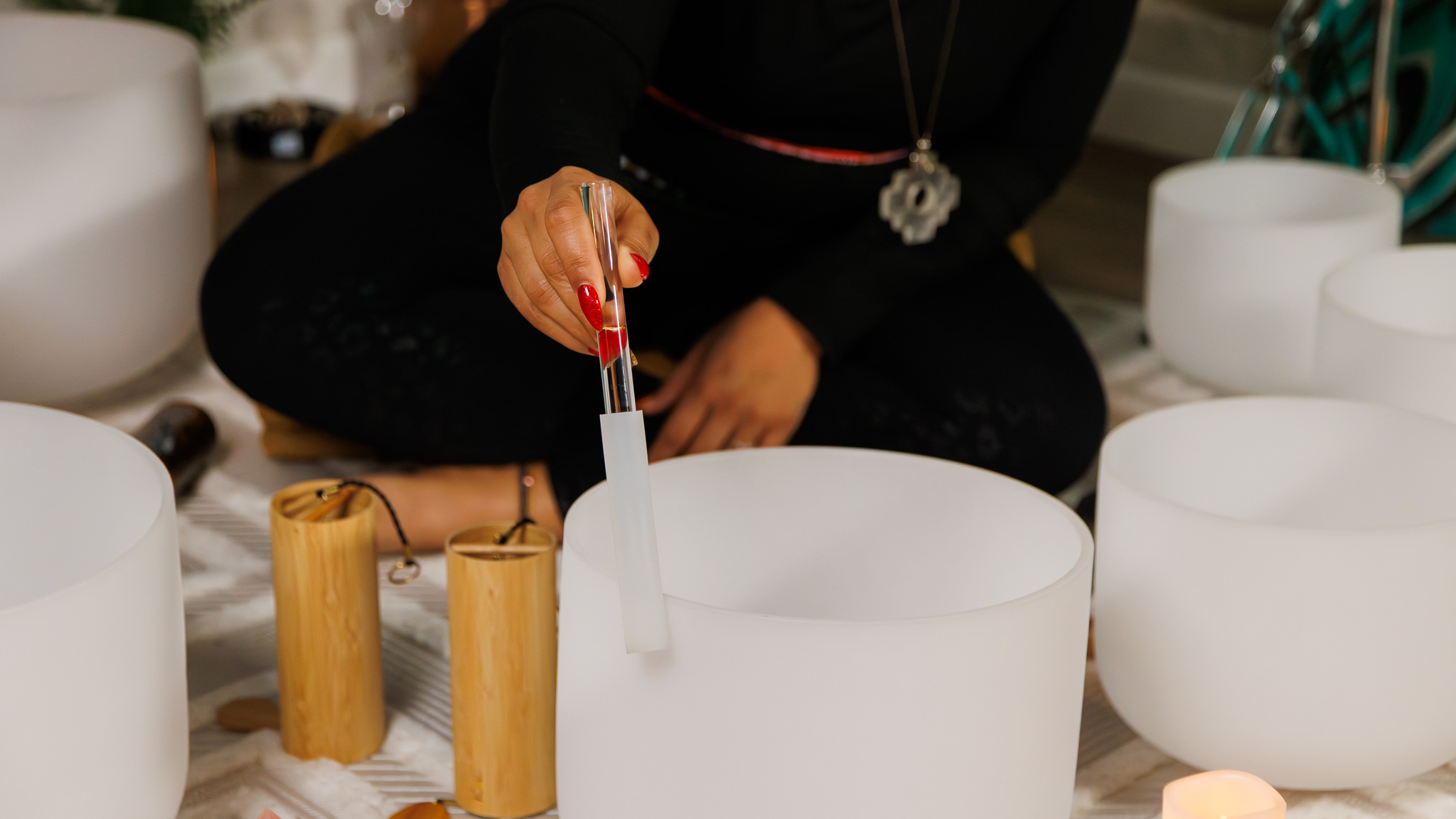
For many people, the crystal singing bowls are the most recognizable instruments in a Guided Grounding sound immersion: large, white bowls, whose tones seemed to continue long after the bowls were played.
Crystal singing bowls create rich, sustained sounds that form the foundation of many Guided Grounding experiences. But where did these instruments come from, and what role do they serve during a sound immersion?
Their story may be different from what you expect.
What Are Crystal Singing Bowls?
Crystal singing bowls are sound instruments made primarily from quartz.
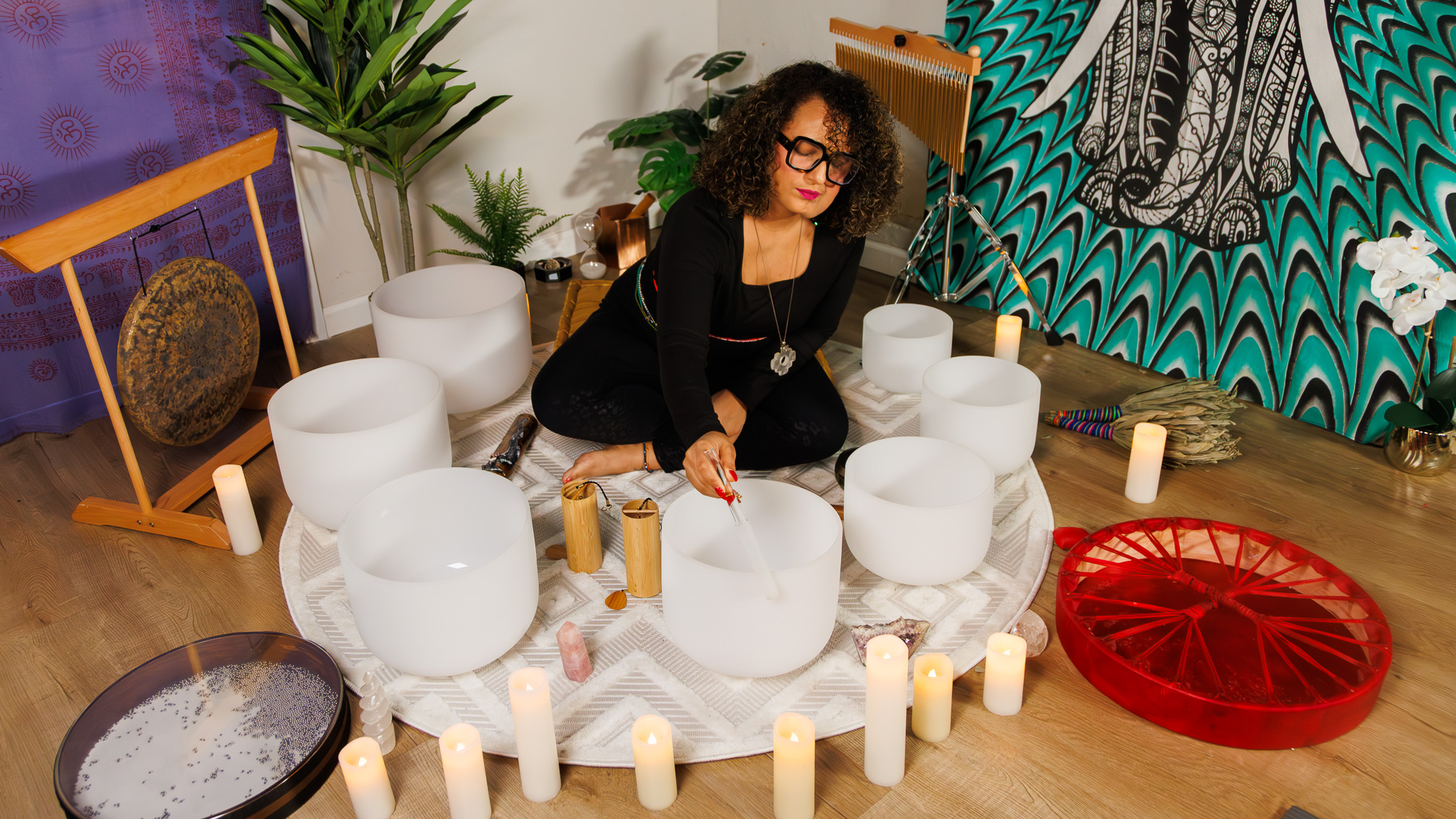
The frosted bowls I use during Guided Grounding sessions are played by gently striking the outside of the bowl or moving a mallet around its rim. This causes the bowl to vibrate and produce a sustained musical tone.
The principle is similar to what happens when a bell is struck or when someone moves a finger around the rim of a glass. The vibrating material produces sound, and the bowl’s shape allows that sound to continue resonating after the initial movement.
Because each bowl is a different size and tuned to a different musical note, several bowls can be played together to create layers of sound.
Those layers are an important part of the Guided Grounding experience.
A Modern Instrument With an Unexpected History
Generally, singing bowls are often described as ancient instruments. However, the crystal bowls used in contemporary sound immersion practices are relatively modern.
Their development has been traced to the mid-1980s, when quartz crucibles used in semiconductor manufacturing began to be repurposed as musical instruments. These quartz vessels were originally designed for industrial processes connected to producing silicon components for computers and other electronics.
This history is explored in research by Cornell University scholar Owen Marshall, whose work traces how quartz crucibles began being repurposed as crystal singing bowls during the 1980s.
People eventually discovered that the quartz vessels created long, resonant tones when struck or circled with a mallet.
Over time, manufacturers began producing quartz bowls specifically for musical, meditation, and wellness settings.
I find this history meaningful because it reminds us that an instrument does not need an ancient origin to create a powerful experience.
Sometimes meaning develops through how something is used, the intention brought to it, and the space created around it.
The Role of the Bowls in Guided Grounding
During a Guided Grounding session, I use seven frosted crystal singing bowls to create rich, sustained tones that form the foundation of the sound experience.
The bowls are not simply background music.
Their sound helps shape the environment of the room.
A tone may begin softly, expand through the space, and gradually fade. Before one sound disappears completely, another may be introduced. This creates a continuous soundscape that invites participants to listen without needing to analyze what they are hearing.
Attuned to the organ systems of the body, I tend to begin a sound immersion with harmonious notes connected to the base of the body, slowly moving up toward the crown throughout the session.
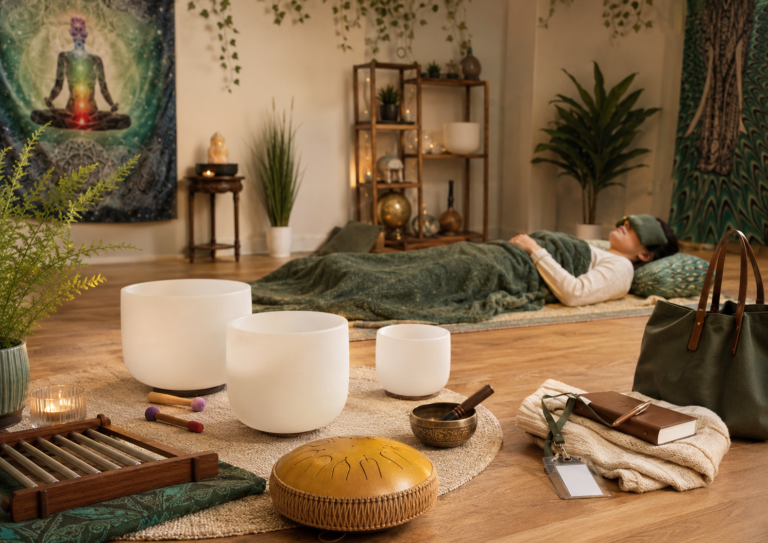
The bowls may help mark the transition from activity into stillness.
They may also provide a gentle point of focus when the mind is busy or distracted.
There is nothing participants need to memorize, follow, or interpret. They can simply notice the sound as it changes.
Why Sustained Sound Can Feel Different
Much of our daily environment is filled with abrupt sounds. Phones ring. Notifications arrive. Conversations overlap. Appliances hum. Traffic passes. Someone needs an answer, a decision, or our attention.
The tones of the crystal singing bowls are different.
They arrive gradually and remain present for several moments. Participants have time to notice the beginning of a sound, its fullness, and its gradual disappearance. The frequency of the sounds, as they blossom throughout the space, also creates felt experience within the body that doesn’t require cognitive attention.
That process can invite a different type of listening.
Instead of waiting for the next instruction or trying to anticipate what is coming, participants can practice remaining with what is happening now.
For some people, this may feel calming. Others may notice thoughts, emotions, physical sensations, or simply the sound and vibration itself.
Every experience is unique.
There Is No “Right” Way to Experience the Bowls
One person may feel deeply relaxed when listening to the crystal singing bowls.
Another may become more aware of how much tension they have been carrying.
Someone else may notice that their mind remains active for much of the session.
Others may completely fall asleep.
All of these experiences are valid.
There is nothing to achieve, perform, or get “right.” Your only job is to rest.
You do not need to clear your mind. You do not need to feel a particular sensation. You do not need to understand why one tone feels different from another.
My role is to guide the experience—not to direct what your body or mind should experience.
You remain in control throughout the entire session. Participants may adjust their position, sit instead of reclining, step away from the room, or choose not to engage with a particular practice.
What Does the Research Say?
Research into singing-bowl practices is growing, but the evidence is still developing.
Some studies involving singing-bowl meditation have reported reductions in self-reported tension, fatigue, anger, and other forms of distress following a session, which aligns with the vast majority of feedback from my clients.
Explore the Research
A published observational study of 62 participants reported reduced self-reported tension, anger, fatigue, and depressed mood following a singing-bowl sound meditation. Read the study through the National Library of Medicine.
A systematic review of human-health research involving singing bowls found reports of possible psychological and physiological benefits, while also emphasizing the need for stronger research designs.
A more recent systematic review of singing-bowl interventions similarly described potential benefits while noting limitations in the available evidence.
However, systematic reviews have also noted that the number and quality of available studies remain limited and that more rigorous research is needed.
Much of the available research examines metal singing bowls or mixed sound-meditation experiences rather than crystal singing bowls specifically.
For that reason, I do not present the bowls as a medical treatment or promise that a particular sound will produce a particular health outcome.
What I can offer is a professionally facilitated environment in which people are invited to pause, listen, reconnect with their bodies, and practice intentional rest.
More Than an Instrument
The crystal singing bowls are central to Guided Grounding, but the experience is about more than the instruments.
The bowls help create the environment. The invitation is to pause. To temporarily step away from performing, producing, solving, helping, and responding. To practice doing nothing on purpose.
In a culture that often treats rest as something we must earn, choosing to become still can be a meaningful act.
The sound does not require you to become someone different. It simply gives you a place to notice where you are.
Learn More
- Smithsonian National Museum of Natural History: All Sorts of Quartz
- Owen Marshall, Cornell University: How the Quartz Crucible Became the Crystal Singing Bowl
- Goldsby, Goldsby, McWalters and Mills: Effects of Singing Bowl Sound Meditation on Mood, Tension and Well-Being
- Stanhope and Weinstein: The Human Health Effects of Singing Bowls: A Systematic Review
- Cai and colleagues: Therapeutic Effects of Singing Bowls: A Systematic Review
Make space to pause, listen, and reconnect.
Guided Grounding offers private and public sound immersions as well as professionally facilitated experiences for workplaces, healthcare teams, recovery programs, senior living communities, nonprofits, conferences, retreats, and community organizations.
Each session is thoughtfully adapted to the people, physical environment, and purpose of the gathering.
There is no right way to experience sound. There is only an invitation to pause, listen, and reconnect.

Dr. Sharon GE Washington
Dr. Sharon GE Washington is the founder of Guided Grounding, providing professionally facilitated restorative wellness and sound immersion experiences for individuals, communities, and organizations.