What Is Sound Immersion?
A Beginner’s Guide to Rest, Sound, and Nervous System Regulation
A gentle introduction to sound immersion, what happens during a session, and how Guided Grounding supports deep rest, practical care, and nervous system regulation.
A beginner-friendly guide from Guided Grounding, offering sound immersion and sound bath experiences throughout South Jersey, Philadelphia, and the surrounding Tri-State area.
In This Guide
We live in a culture that celebrates productivity but often overlooks one of our most basic human needs: rest.
Many of us have become so accustomed to living in a constant state of stress that true relaxation can feel unfamiliar—even uncomfortable. We carry tension in our bodies, replay conversations in our minds, rush from one responsibility to the next, and struggle to “turn off” at the end of the day. While vacations and weekends can provide a break from work, they don’t always provide the kind of rest our nervous systems truly need.
That’s where sound immersion offers something different.
Rather than asking you to “clear your mind” or force yourself to meditate, sound immersion creates an environment that gently invites your body and mind to settle into a deeper state of rest.
What Is Sound Immersion?
A sound immersion (sometimes called a sound bath or sound journey) is a guided experience that uses soothing sounds, vibrations, breath awareness, and mindful presence to encourage relaxation and nervous system regulation.
Despite the name, there is no water involved. The term sound bath simply refers to being “bathed” or surrounded by layers of calming sound.
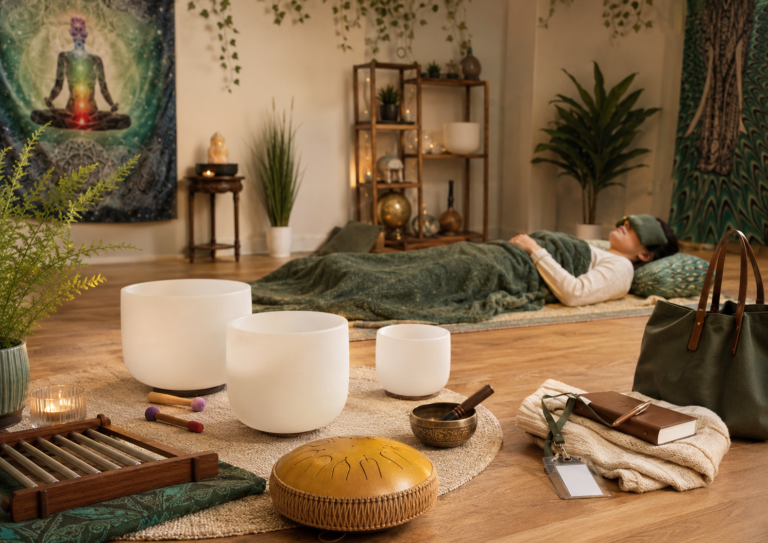
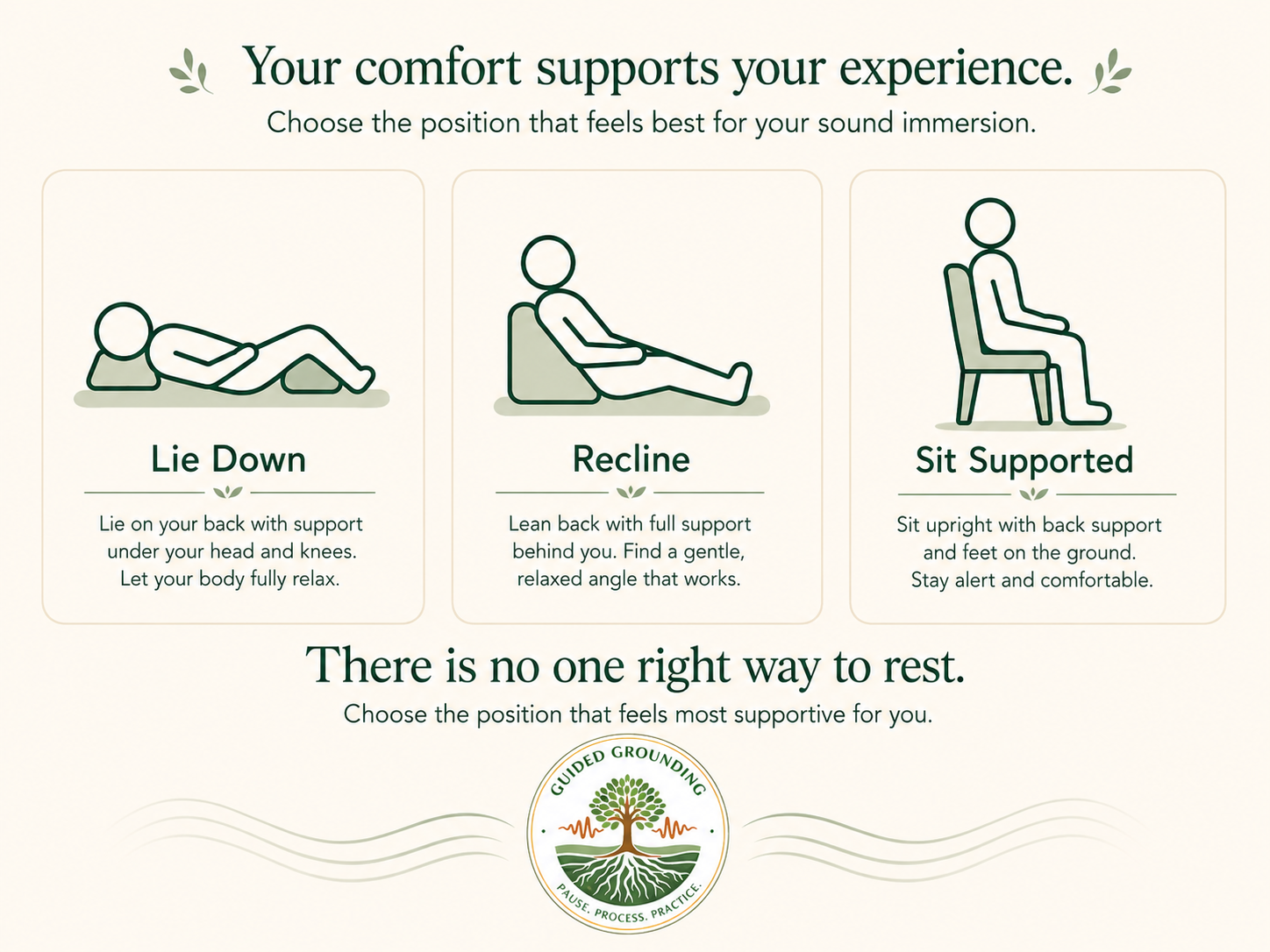
During a Guided Grounding session, participants typically lie comfortably on a yoga mat, recline in a chair, or settle into another supportive position while allowing themselves to simply listen and receive. There is nothing to achieve, perform, or get “right.” Your only job is to rest.
Unlike many wellness practices that require movement or concentration, sound immersion invites you to practice something many of us rarely experience: doing nothing on purpose.
What Happens During a Session?
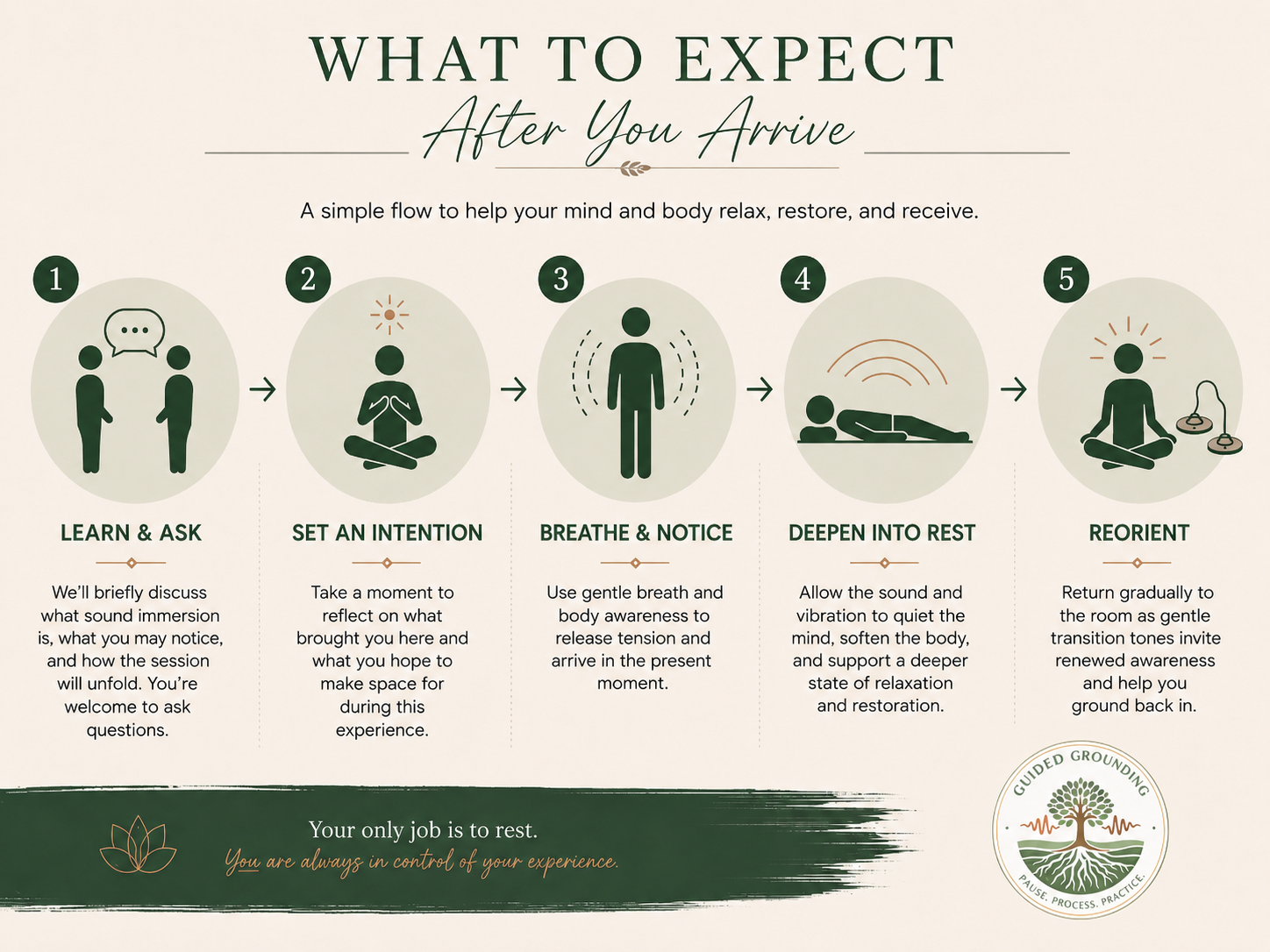
Every Guided Grounding sound immersion begins before the first instrument is ever played.
Rather than immediately settling into silence, we begin with a brief conversation to help everyone arrive with intention and ease. This opening creates space to learn about the experience, ask questions, and understand what to expect.
During this time, we’ll explore:
- what sound immersion is (and what it isn’t)
- what you might notice physically, mentally, or emotionally during the session
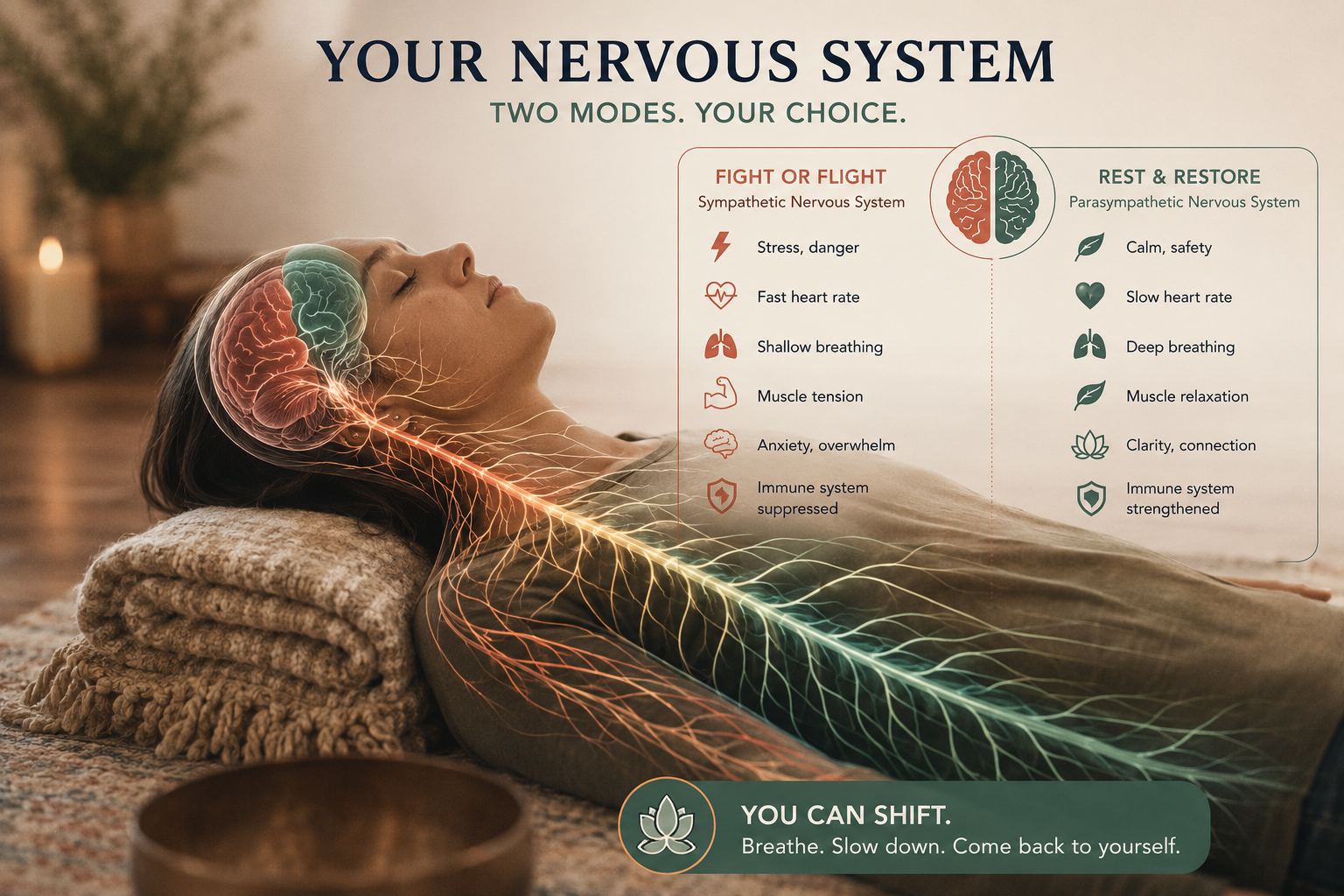
- how the nervous system responds to periods of intentional rest
- ways to support your own comfort throughout the experience
- any questions or concerns you may have before we begin
We’ll also take a few moments to reflect on personal intentions. Some participants arrive seeking relaxation after a stressful week, while others come hoping to reconnect with themselves, process emotions, cultivate gratitude, or simply experience stillness. There is no “right” intention—only an invitation to notice what brought you here.
Creating this space for education and conversation is intentional. When we understand what our bodies may experience, we often feel more comfortable allowing ourselves to fully settle into the practice. One of the most important things I want participants to know is that you remain in control throughout the entire experience. You’re always welcome to adjust your position, open your eyes, sit up, step out if needed, or simply listen in whatever way feels most supportive to you. My role is to guide the experience—not to direct what your body or mind should experience.
From there, we’ll transition into a few moments of gentle breath awareness and body awareness, inviting you to notice where you’re carrying tension and to begin arriving in the present moment.
You may notice:
- your breathing slowing naturally
- muscles beginning to soften
- your thoughts becoming quieter
- emotions surfacing and passing
- vivid imagery or memories
- a sensation of floating or timelessness
- simply enjoying a rare opportunity to rest without interruption
Every experience is unique.
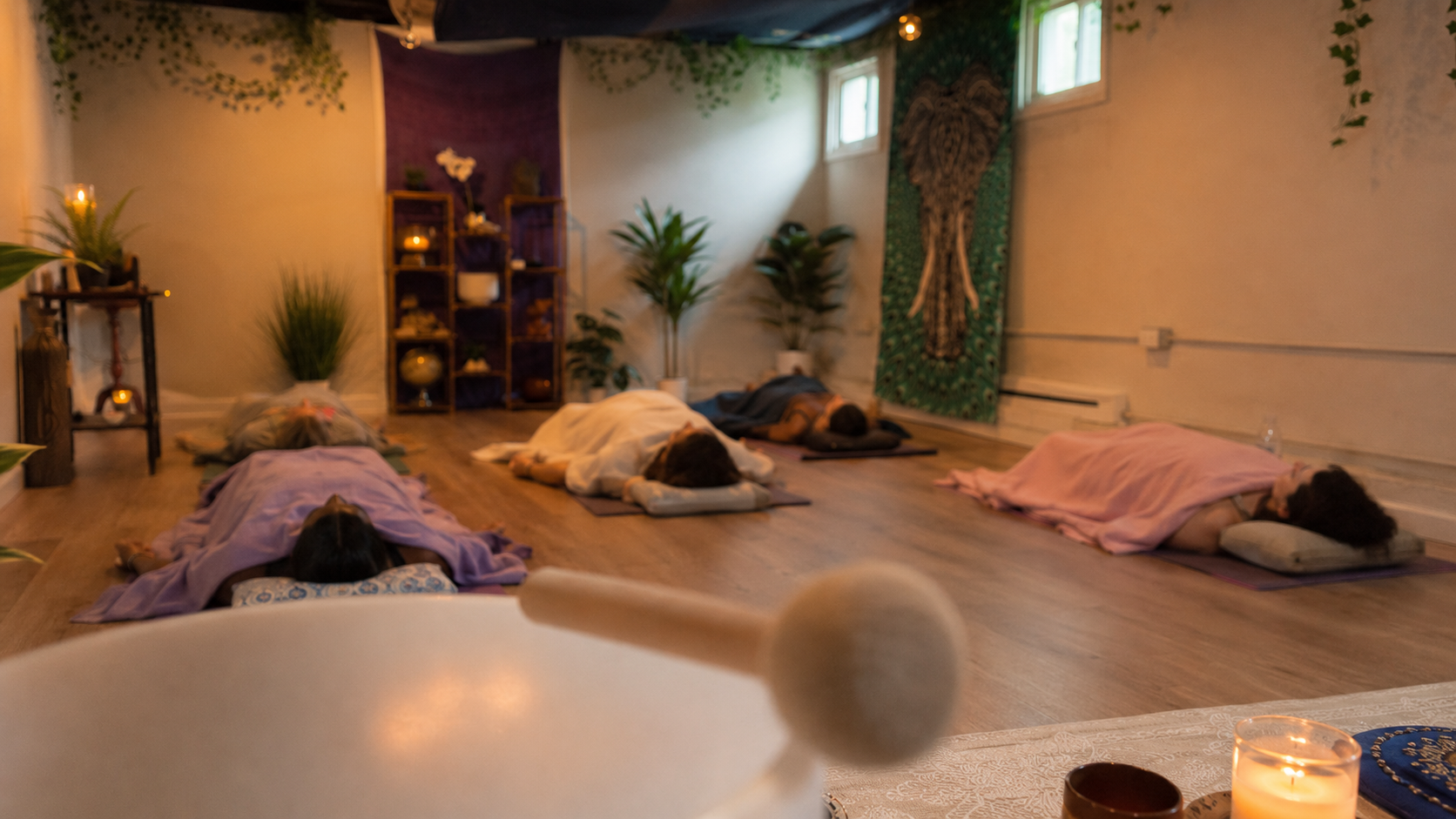
Some participants remain awake throughout the session, while others drift into a deeply restful state somewhere between wakefulness and sleep, and many fall completely asleep. All experiences are completely normal.
The Instruments of Guided Grounding
Every instrument offers a different quality of sound and invites the body into a unique listening experience.

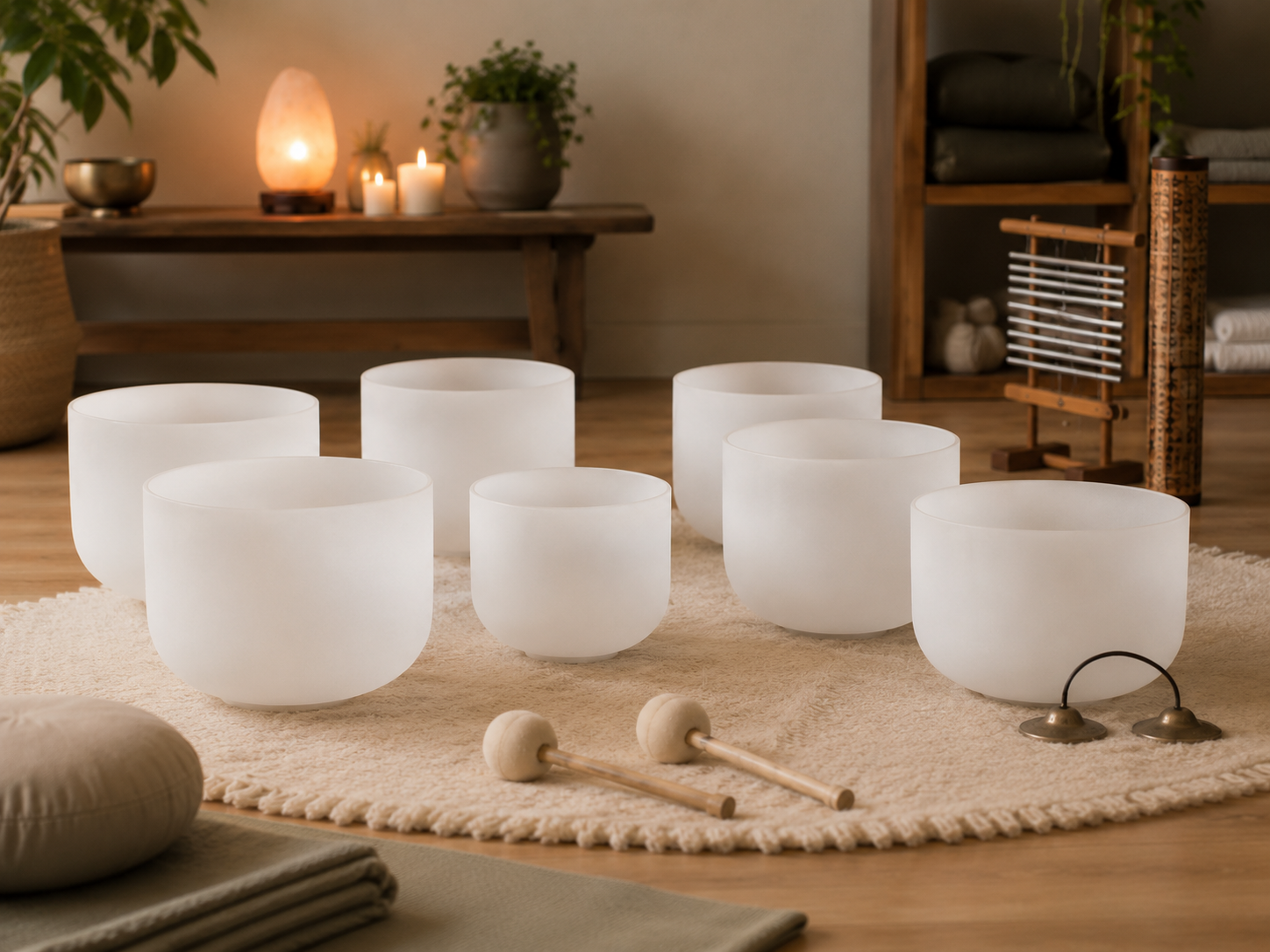
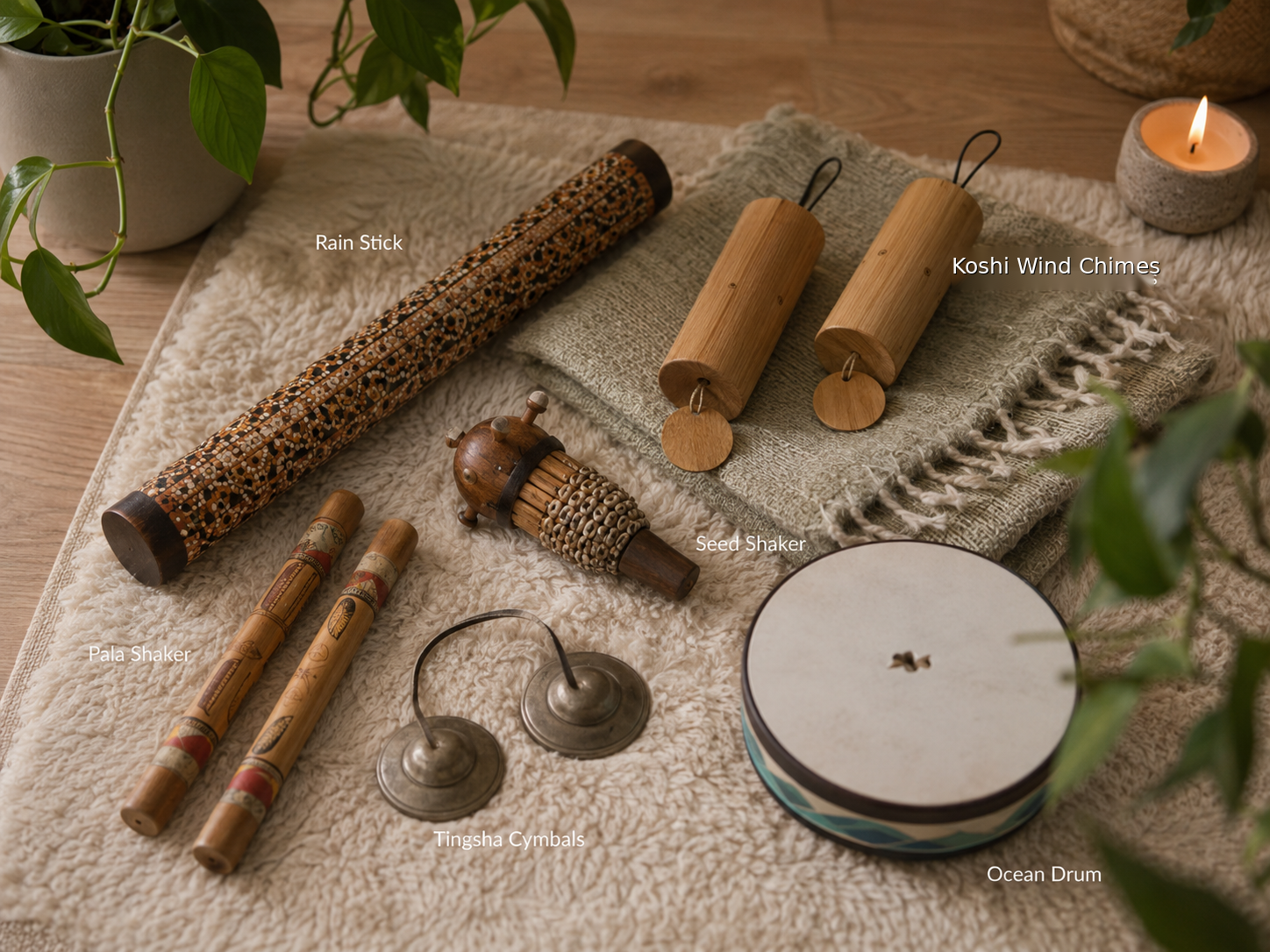
Some of the instruments you may experience include:
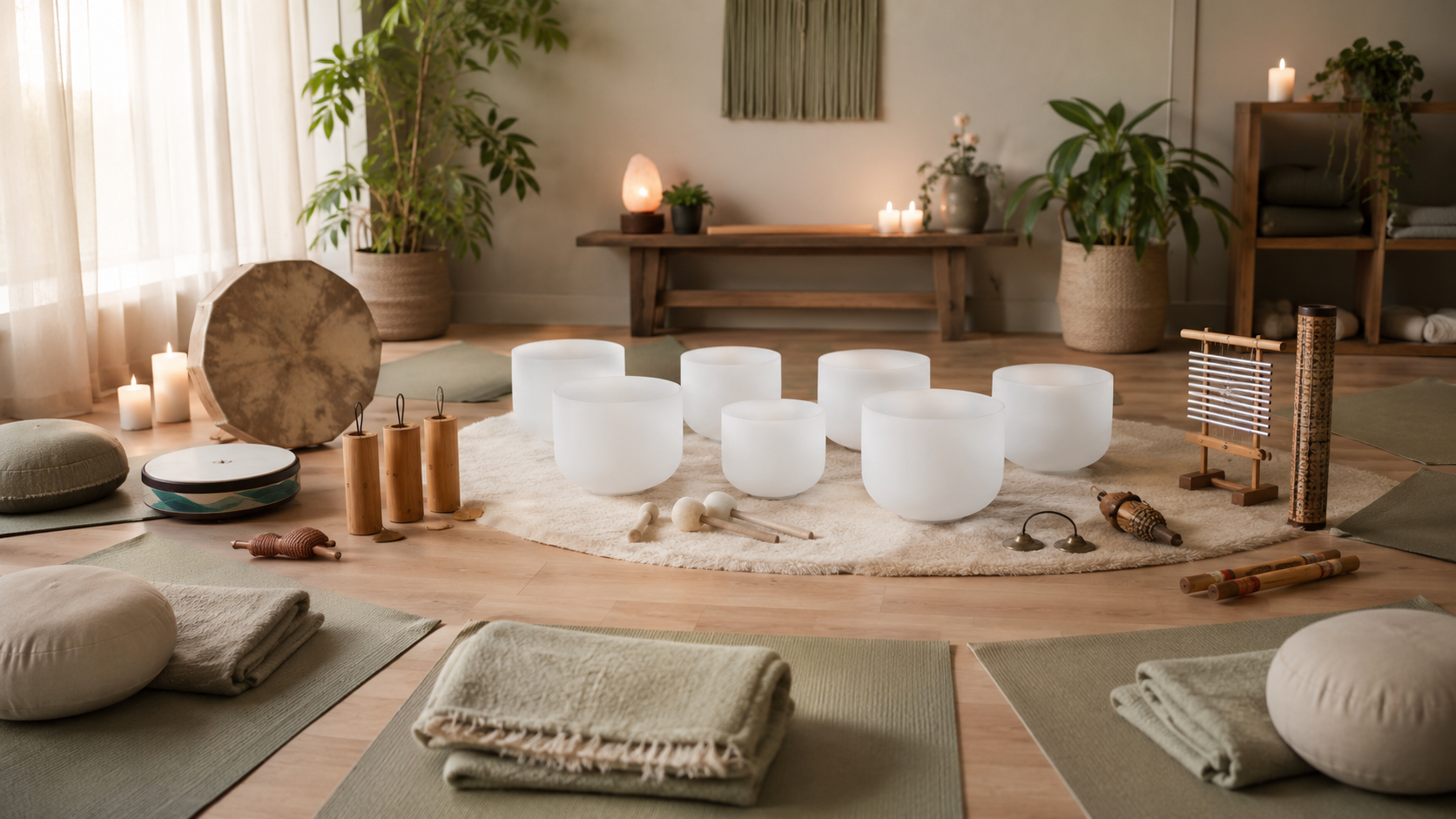
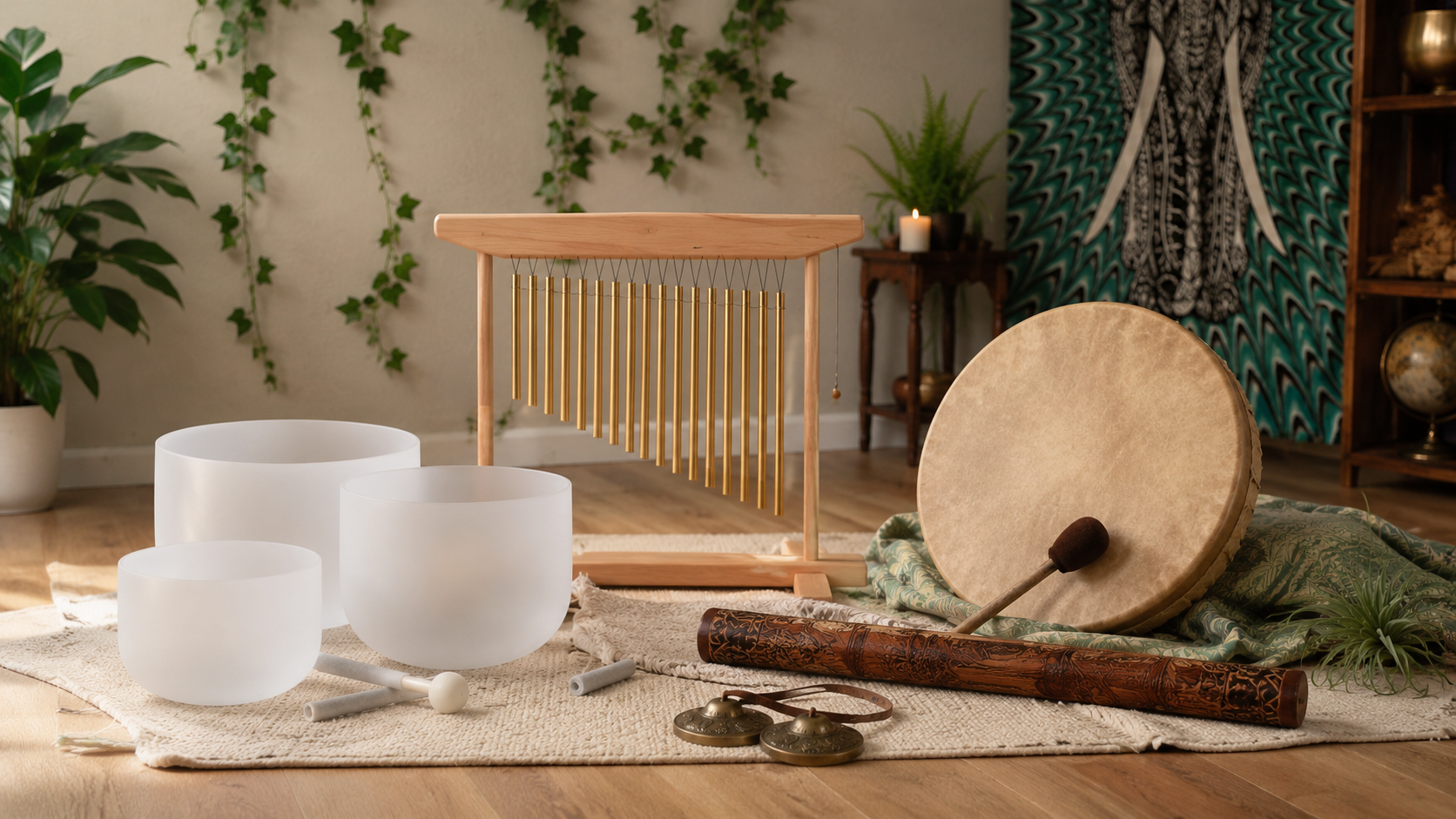
- Seven Frosted Crystal Singing Bowls, which create rich, sustained tones that form the foundation of the sound immersion experience. Their resonant sounds invite deep listening and often help participants settle into a state of relaxation, reflection, and present-moment awareness.
- Koshi Wind Chimes (Earth, Air, Fire, and Water), which create delicate, melodic tones inspired by the natural elements
- Ocean Drum, offering rhythmic sounds reminiscent of waves washing onto shore
- Shamanic Native Drum, providing grounding, steady rhythms that can encourage presence and connection
- 10-Note Meditation Flow Chime, creating gentle cascading tones that support relaxation
- Rain Stick, evoking the calming sound of falling rain
- Peruvian Chakapas, hand-held leaf rattles traditionally used in ceremonial practices that produce soft, sweeping textures
- Seed Shaker and Pala Shaker, adding subtle rhythmic movement and natural sound
- Tingsha Cymbals, whose bright, resonant tones can gently mark transitions and invite renewed awareness
Each instrument contributes its own voice to the overall experience, creating a rich and layered soundscape that encourages deep listening and relaxation.
More Than Listening: Rest, Breath, and Body Awareness
Although the instruments are an important part of the experience, sound immersion is about much more than sound alone.
At Guided Grounding, sessions intentionally integrate:
- mindful breathing
- gentle body awareness
- opportunities to notice physical sensations without judgment
- moments of stillness
- permission to simply be
Many of us spend our days disconnected from our bodies while our minds race ahead to the next task. Sound immersion offers an opportunity to reconnect.
Instead of asking: “What do I need to accomplish?”
We begin asking: “What am I noticing right now?”
That simple shift can become a powerful practice in itself.
How Is Sound Immersion Different from Other Experiences?
Because sound immersion draws from multiple traditions, people sometimes wonder how it differs from other wellness practices.
It is not a concert.
While beautiful instruments are played throughout the experience, the goal isn’t entertainment or performance. The sounds are offered to create an environment that supports rest and mindful awareness rather than to showcase musical skill.
It is not guided meditation.
Many guided meditations involve continuous verbal instruction or visualization.
During sound immersion, spoken guidance is typically minimal, allowing participants to have their own personal experience with the sounds and their own internal awareness.
It is not psychotherapy.
Sound immersion is not counseling, mental health treatment, or trauma therapy.
Although emotions may naturally arise during deep relaxation, Guided Grounding does not diagnose, treat, or provide psychotherapy. Participants seeking treatment for mental health conditions should work with licensed healthcare professionals.
It is not clinical music therapy.
Clinical music therapy is a healthcare profession delivered by board-certified music therapists who use music interventions to accomplish individualized therapeutic goals within clinical settings.
Sound immersion is a complementary wellness practice. While both involve sound and music, they are distinct disciplines with different training, goals, and scopes of practice.
What Does the Research Say?
Research exploring sound meditation and singing bowls is still emerging, but early findings are encouraging.
In one observational study involving 62 adults, researchers found that participants experienced significant reductions in tension, anger, fatigue, depressed mood, and physical pain immediately following a Tibetan singing bowl meditation session. The study also found decreases in anxiety among participants who had not previously experienced this type of meditation.
Because this study did not include random assignment or a comparison group, it cannot prove that the singing bowls alone caused these improvements. However, it suggests that sound meditation may offer meaningful short-term benefits and provides a promising foundation for future research.
Researchers continue to study how sound-based practices may support relaxation, stress reduction, emotional well-being, and overall quality of life.
Research source
Goldsby, T. L., et al. “Effects of Singing Bowl Sound Meditation on Mood, Tension, and Well-Being: An Observational Study.”
Who May Benefit?
People seek Guided Grounding for many different reasons.
Participants often include:
- healthcare professionals experiencing chronic stress or burnout
- caregivers supporting loved ones
- individuals navigating anxiety or high stress
- people in addiction recovery programs
- older adults seeking gentle, accessible wellness practices
- educators, therapists, social workers, and first responders
- anyone looking to establish a consistent self-care practice
Many participants simply come because they realize they’ve forgotten what it feels like to truly rest.
Is Sound Immersion Right for Everyone?
While sound immersion is generally well tolerated by many people, it may not be appropriate for everyone.
You should consult your healthcare provider before participating if you have:
- certain seizure disorders that may be triggered by sensory stimulation
- sound sensitivities or conditions that make prolonged auditory experiences uncomfortable
- certain psychiatric conditions where immersive sensory experiences may not be appropriate without clinical guidance
- other medical concerns about participating in relaxation or meditation-based practices
If you wear hearing aids, use mobility devices, or have physical limitations, sessions can often be adapted to help you participate comfortably.
When in doubt, it’s always best to speak with your healthcare provider before participating.
An Invitation to Pause
At Guided Grounding, I don’t believe we need to earn rest. I believe rest is part of how we heal, reconnect, and sustain ourselves.
Whether you’re caring for patients, supporting your family, leading a team, navigating recovery, or simply feeling the weight of everyday life, sound immersion offers an opportunity to slow down, breathe deeply, and reconnect with yourself.
You don’t need experience with meditation. You don’t need to know how to “clear your mind.” You simply need to arrive.
Sometimes, the most restorative thing we can do is allow ourselves to be still—and let the sounds do the rest.
Experience Sound Immersion in South Jersey and Philadelphia
Guided Grounding offers beginner-friendly public, private, and group sound immersion experiences in South Jersey, Philadelphia, and surrounding communities. Explore upcoming sound baths or contact us to discuss a private session.
Frequently Asked Questions
Is sound immersion the same as a sound bath?
Do I need experience to attend a sound immersion?
Do I have to lie on the floor?
Where can I attend a Guided Grounding sound immersion?
Guided Grounding experiences support education, relaxation, and wellbeing. They do not replace medical or mental health care.